
Install Flooring
Oct 1st 2021
In recent years, vinyl plank flooring has become extremely popular, for good reason.
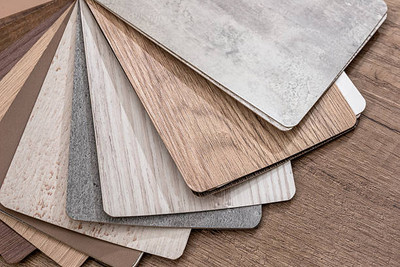
Luxury vinyl plank's durability and water-resistant characteristics coupled with its ease of installation have made it a top choice for professionals and many DIY installers as well. With advances in vinyl flooring manufacturing and technology, modern vinyl plank flooring is available in extremely realistic wood or stone patterns and textures. Vinyl is now the ideal choice for many applications including hallways, living rooms, kitchens, and even bathrooms due to its water-resistant characteristics.
Types of Vinyl Plank flooring
Vinyl plank flooring is engineered to be installed in one of two methods: glue-down or floating. For a Do-It-Yourselfer, floating or click-lock vinyl flooring is often an easier method, as there is no adhesive or mess to deal with. In this method, floating floor style vinyl planks are locked together, using a built-in tongue and groove system, and laid onto the subfloor -- or can even be installed directly over an existing floor! This installation method is called “floating” because the flooring sits above the subfloor without adhesive, to allow for natural expansion and contraction due to humidity or temperature changes. Because of vinyl flooring’s climate sensitivity, be sure to leave about a ¼-inch expansion gap around the perimeter of your floor. This way if the flooring expands it will have the space to do so and it won’t warp or buckle in the middle. After all of your hard work planning, prepping, and laying your vinyl planks, the last thing you want is warped boards! Don’t worry, you’ll never see this spacing gap surrounding your finished floor, as decorative trim and shoe mold can be used to cover this space
How to lay vinyl floor
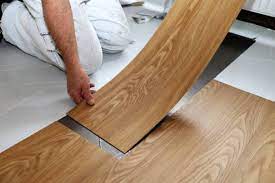
Just like any other home project, having the right tools is absolutely essential. Compared to materials like tile and hardwood, vinyl plank installation can be much easier. Here are some of the most common tools you’ll need to install floating vinyl planks yourself and be sure not to skimp on the knee pads:
Safety & Comfort
- Knee pads
- Safety Glasses
Tools & Materials
- Flush cut saw
- Circular saw
- Hammer
- Drill
- Jigsaw
- Spacers
- Rubber mallet
- Tapping block
- Carpenter’s square
- Razor knife
- Pry bar or metal putty knife
- Tin snips
- Vinyl flooring for area
- Transition trim
- Shoe mold or Quarter round